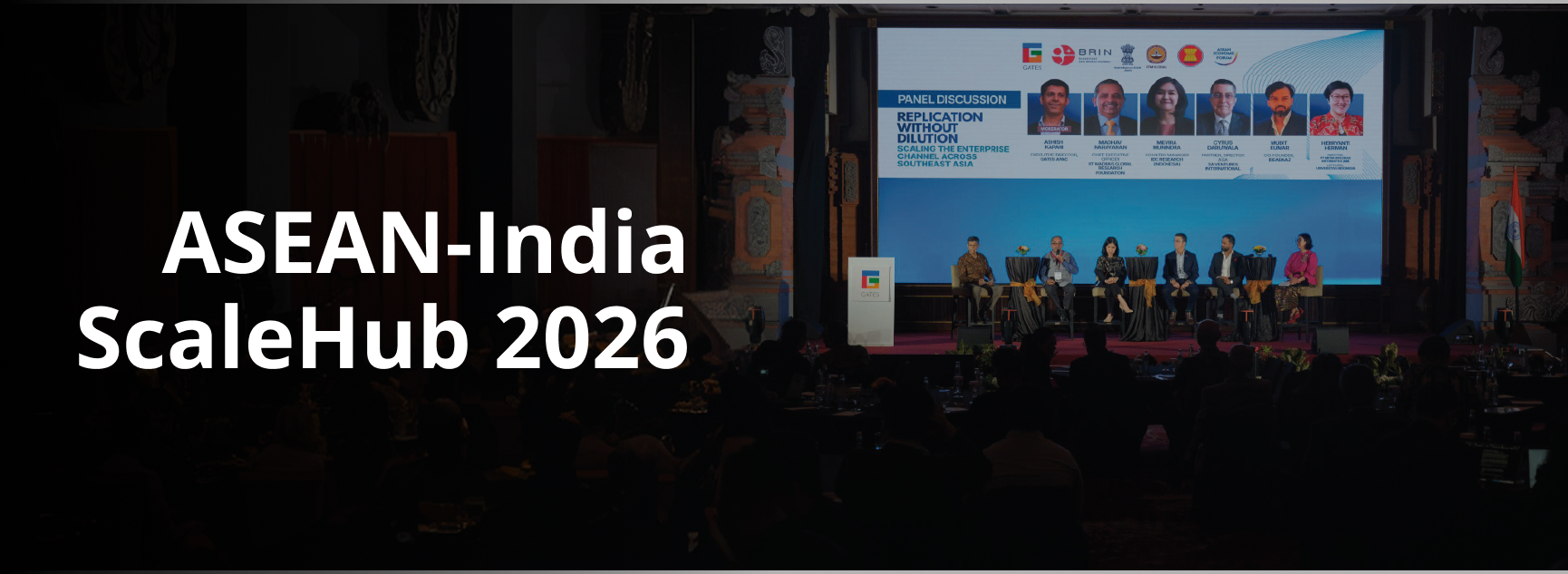
ASEAN-India ScaleHub 2026 Concludes,
Strengthening Cross-Border Innovation and Enterprise Partnerships
Three-day summit brings together ASEAN and Indian leaders, technology companies, startups, investors, academia, and enterprises to accelerate innovation, digital transformation, and cross-border business collaboration
BALI, Indonesia — ASEAN-India ScaleHub 2026 concluded in Bali following three days of high-level dialogue, strategic business meetings, startup pitches, technology showcases, and industry discussions, reinforcing the growing partnership between India and Southeast Asia in innovation, enterprise development, and digital transformation.
Held from July 15 to 17 and organized by GATES APAC and Asean Economic Forum, the summit brought together more than 80 technology vendors, scaleups, and Independent Software Vendors (ISVs) from India and ASEAN, alongside policymakers, multinational technology companies, distributors, research institutions, academia, investors, and enterprises from across the region.
The scale of participation reflected the evolution of ASEAN-India ScaleHub from an initiative connecting Indian technology companies with Southeast Asian markets into a broader regional platform where governments, enterprises, startups, investors, universities, and technology partners can develop commercial and institutional partnerships.
"This year we had over 80 Technology Vendors & Scaleups/ ISVs who participated in the program, and we concluded with over 1,200 meetings," said Ashish Kapahi, Executive Director of GATES APAC, during the summit's closing ceremony.
The more than 1,200 curated business meetings became one of the summit's strongest outcomes, connecting Indian technology companies with enterprises, government agencies, distributors, investors, system integrators, and channel partners from across Southeast Asia. Unlike informal networking, the meetings were structured around specific business interests and market opportunities, covering partnerships, procurement, technology deployment, investment, and regional expansion.
Regional Leaders Set the Innovation Agenda
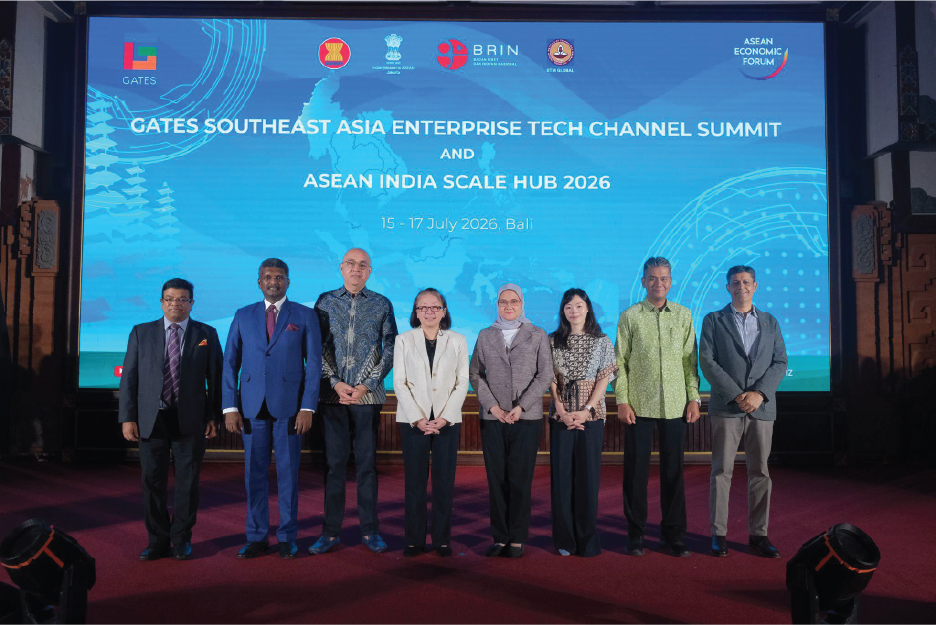
The summit opened with senior leaders from ASEAN, India, and Indonesia highlighting the importance of collaboration to ensure emerging technologies contribute to inclusive and sustainable economic growth.
Among the prominent figures were H.E. Satvinder Singh, Deputy Secretary-General of ASEAN for the ASEAN Economic Community; H.E. Srinivas Gotru, Ambassador of India to ASEAN; H.E. Evangeline T. Ong Jimenez-DuCrocq, Permanent Representative of the Philippines to ASEAN; and Dr. Boediastoeti Ontowirjo, Deputy for Research and Innovation Policy at Indonesia's National Research and Innovation Agency (BRIN).
Satvinder Singh emphasized that Southeast Asia's digital future depends not only on technological advancement, but also on responsible governance, trusted institutions, and stronger cross-border cooperation. Representing India, Srinivas Gotru highlighted innovation and entrepreneurship as increasingly important pillars of ASEAN-India relations, with opportunities spanning digital public infrastructure, startups, research, and advanced technologies.
From Indonesia's research and innovation ecosystem, Boediastoeti Ontowirjo stressed the importance of translating scientific research into practical solutions through collaboration between government, academia, and industry. Her perspective reinforced the summit's broader focus on ensuring that innovation moves beyond research and technology development toward tangible economic and social impact.
The regional perspective was further strengthened by Evangeline T. Ong Jimenez-DuCrocq, who encouraged Southeast Asian countries to leverage their collective strengths as artificial intelligence and digital technologies continue to reshape industries across the region.
A fireside chat moderated by Sachin Gopalan, Chairman of the ASEAN Economic Forum, brought Satvinder Singh, Srinivas Gotru, and Boediastoeti Ontowirjo together to explore how ASEAN and India can strengthen cooperation in building a resilient and innovation-driven regional economy.
The discussion focused on stronger links between governments, research institutions, universities, and the private sector, while also examining policy harmonization, cross-border research, startup ecosystems, and digital infrastructure as foundations for long-term regional competitiveness.
Technology Must Translate into Business Value
As the summit moved into enterprise-focused discussions, artificial intelligence emerged as one of its defining themes.
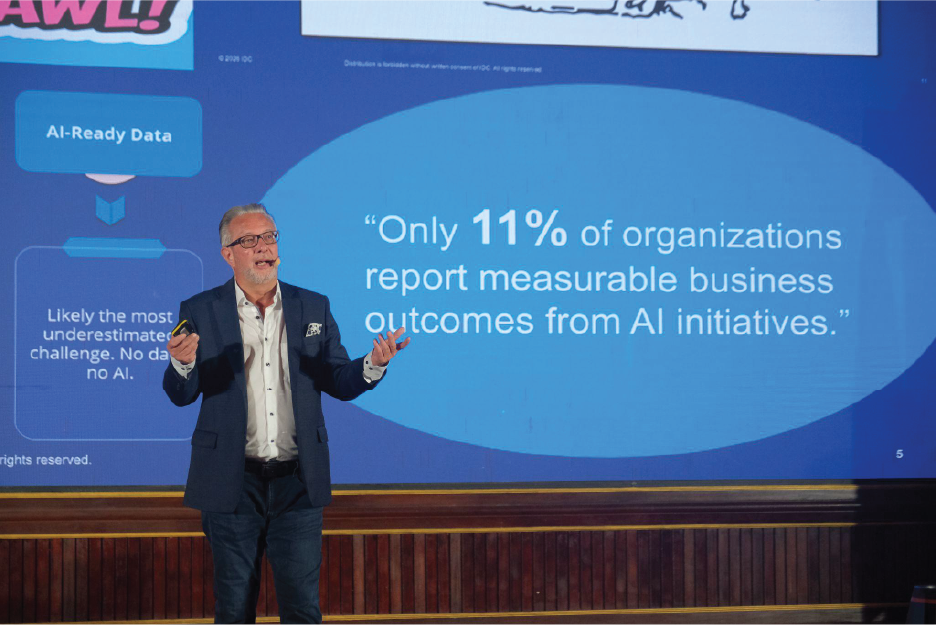
Thomas Meyer, Senior Vice President at IDC Germany, highlighted the changing nature of enterprise AI adoption, arguing that organizations are moving beyond experimentation and proof-of-concept projects toward measurable business outcomes. As companies continue investing in AI, the emphasis is increasingly shifting toward productivity, value creation, organizational readiness, and long-term competitiveness.
The commercial discussion was complemented by Jeffrey Bahar, Chief Operating Officer of Yamada Consulting & Spire Research, who emphasized the importance of starting with customer problems rather than products. He encouraged technology companies and founders to understand real business challenges and develop solutions around customer needs, positioning technology as an enabler of transformation rather than an end in itself.
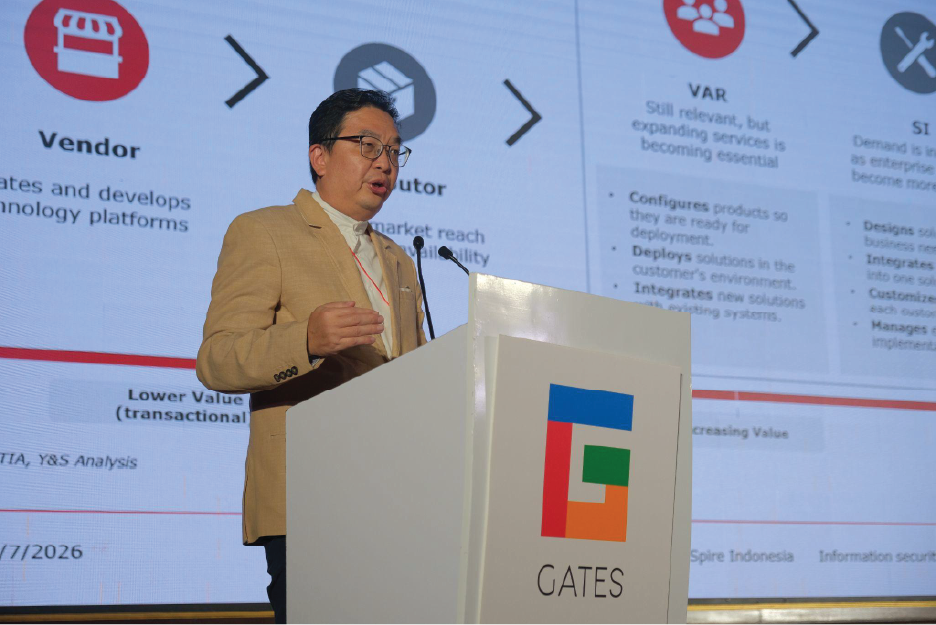
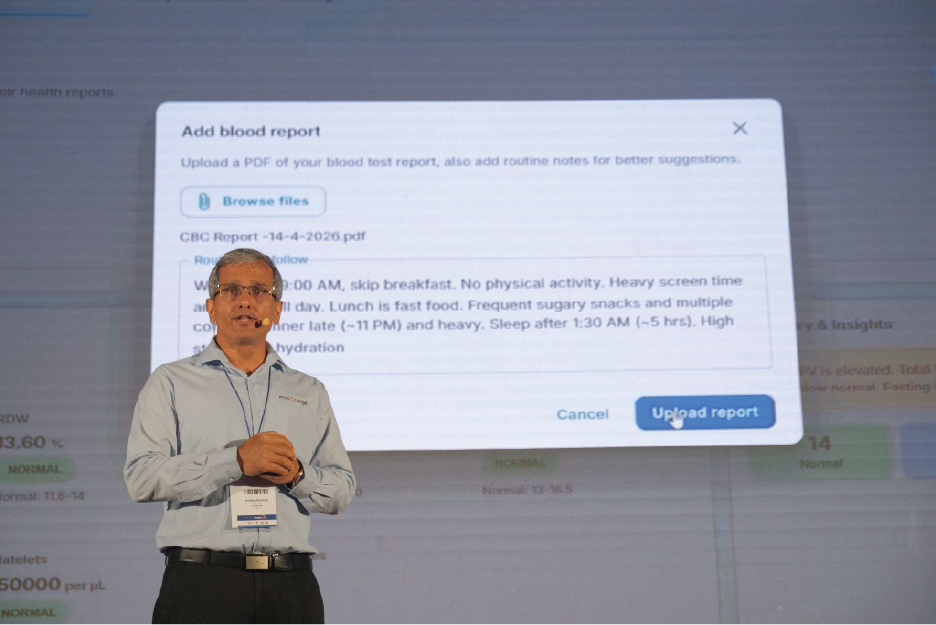
The summit also addressed the infrastructure and security requirements accompanying digital transformation. Arun Kumar, VP APAC at ManageEngine, highlighted the importance of resilient IT infrastructure as organizations accelerate AI adoption, while Anirban Mukherjee, Founder and CEO of miniOrange, emphasized identity and access management as a critical component of enterprise cybersecurity.
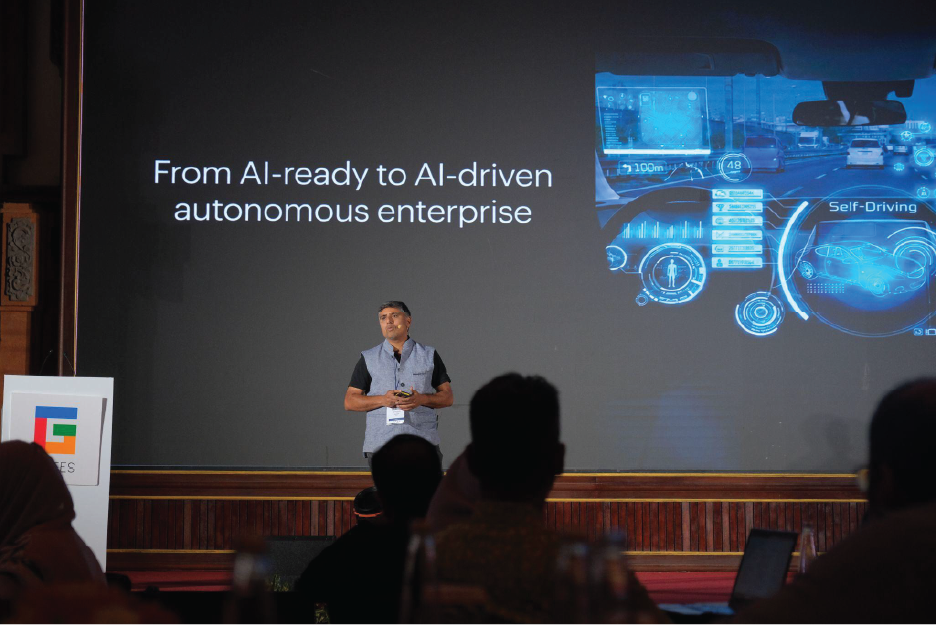
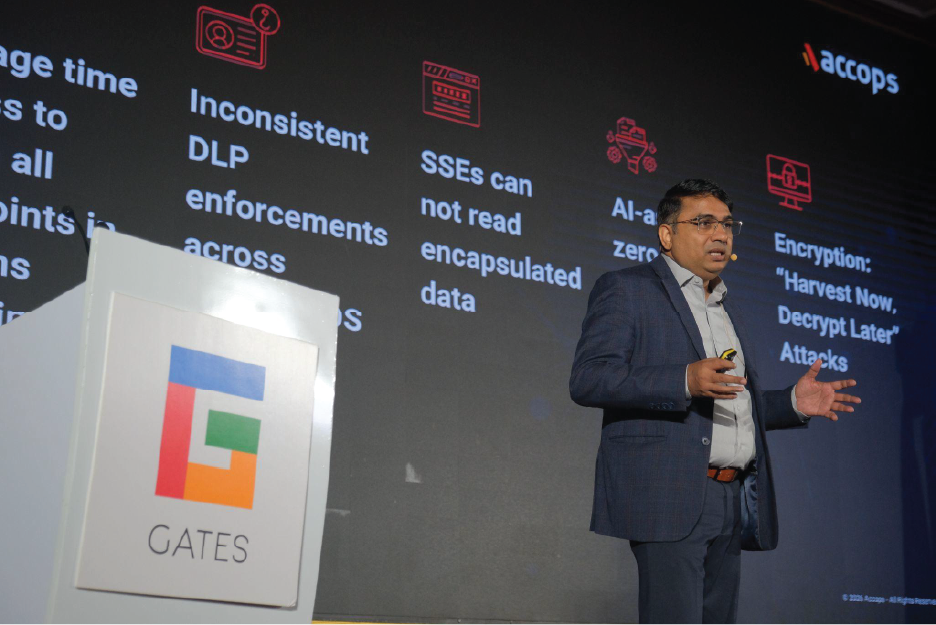
Vijender Yadav, Co-founder and CEO of Accops, further addressed the changing security requirements of distributed and AI-enabled workplaces, highlighting secure remote access, identity protection, and zero-trust architectures as enterprises increasingly move critical workloads into cloud and hybrid environments.
Together, these discussions reflected a central theme of the summit: technological innovation must be supported by the infrastructure, security, business models, and partnerships required to deploy it effectively at scale.
Scaling Across Southeast Asia Requires Local Strategy
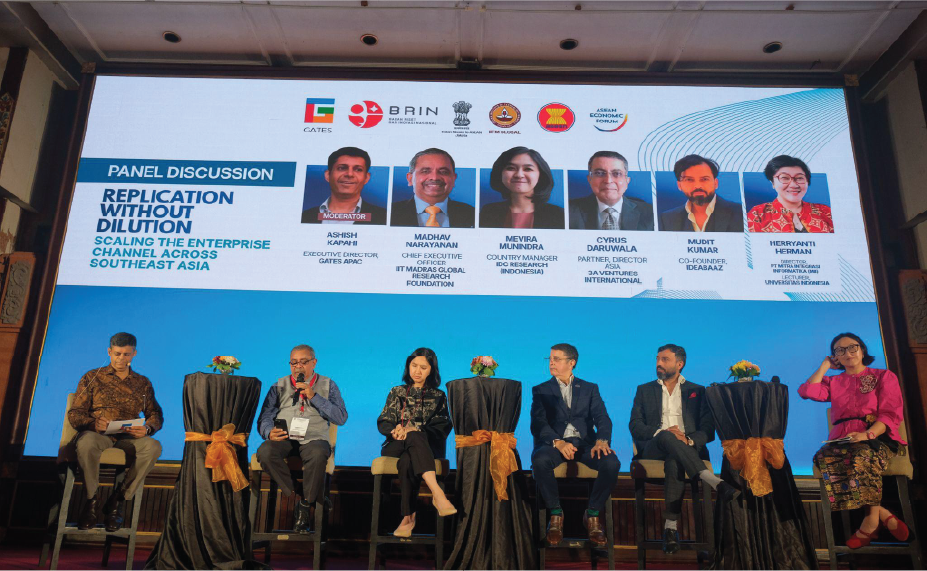
Another major focus was the challenge of expanding technology businesses across Southeast Asia's diverse markets.
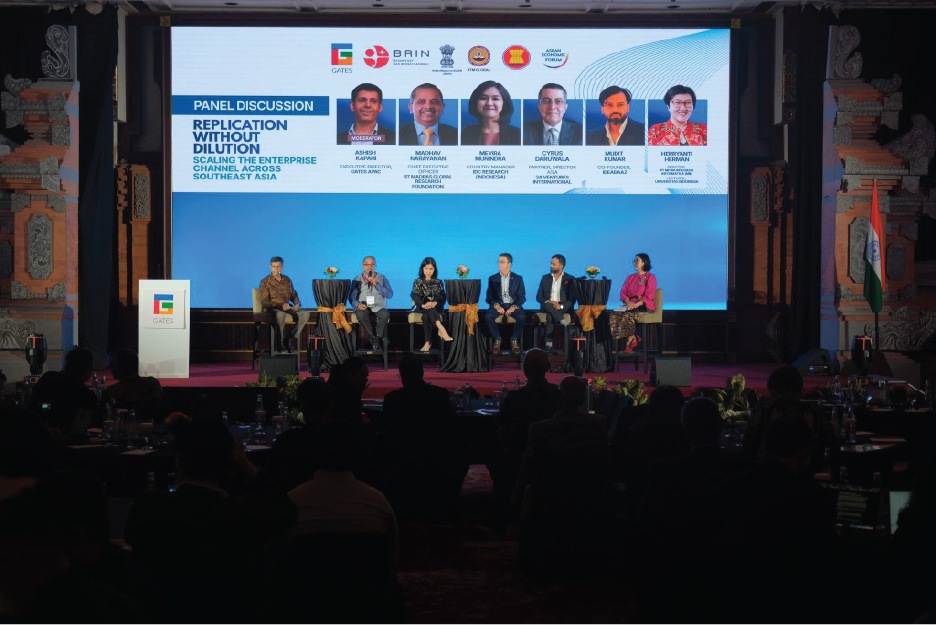
The panel "Beyond Replication: Why Scaling Across Southeast Asia Requires Local Strategy", moderated by Ashish Kapahi, brought together Madhav Narayan, CEO of IIT Madras Global Research Foundation; Mevira Munindra, Country Manager of IDC Research Indonesia; Cyrus Daruwala of 3i Ventures Singapore; Mudit Kumar, Co-Founder of Ideabaaz; and Herryanti Herman, Director of PT Mitra Integrasi Informatika.
The panelists emphasized that ASEAN cannot be treated as a single market. Companies entering the region need to understand differences in economic conditions,customer expectations,regulations, culture, and commercial practices.
Madhav Narayan highlighted the importance of connecting universities, startups, governments, and industry to build stronger innovation ecosystems. Other panelists emphasized the importance of market intelligence, localization, agility, and trusted local partners when expanding technology businesses across Southeast Asia.
A second enterprise panel, "Precision Over Proliferation: Why Southeast Asia's Tech Channel Is Rethinking Partnerships," examined the changing nature of technology partnerships. Speakers including Thu Nguyen, CEO of IDC Group Vietnam; Michael Sunur of PT Berca Hardayaperkasa; Gibu Matthews of Zoho APAC Singapore; Somchai Sittichaisrichart of SIS Thailand; and Sandeep Bhargava of Redington discussed how vendors and distributors are increasingly prioritizing trust, specialization, complementary capabilities, and shared customer success over simply building larger partner networks.
Workshops and Smart Pitch Connect Innovation with Markets
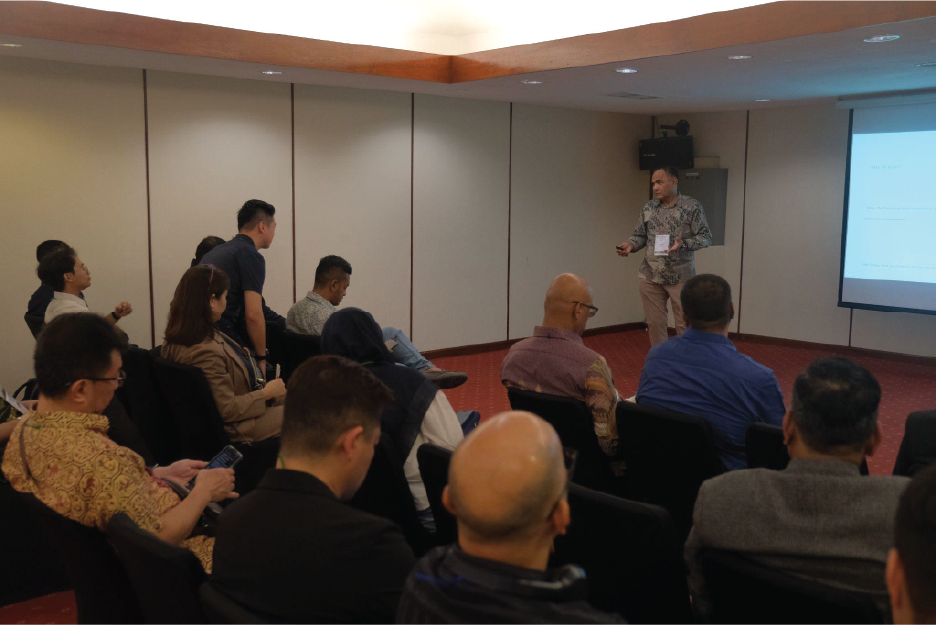
Beyond keynote presentations and panel discussions, ASEAN-India ScaleHub 2026 provided practical opportunities for startups and technology companies to develop their commercial strategies.
The workshop series brought together sessions covering commercialization, branding, intellectual property, cloud marketplaces, and research collaboration. Participants received practical frameworks for strengthening brand positioning, treating intellectual property as a commercial asset, improving market access, building distribution strategies, and connecting university research with entrepreneurship and industry.
The sessions reflected a broader shift from viewing innovation simply as technological advancement toward understanding how technology can be transformed into sustainable businesses and regional market opportunities.
The summit's Smart Pitch sessions complemented the workshops by giving participating startups and technology companies direct access to enterprise leaders, distributors, investors, government representatives, and potential regional partners. Rather than functioning solely as a startup competition, Smart Pitch was positioned as a business development platform where companies could demonstrate how their solutions address real-world challenges while receiving direct feedback from potential decision-makers.
Solutions presented during the sessions spanned artificial intelligence, enterprise software, cybersecurity, healthcare, sustainability, cloud computing, industrial technologies, drone systems, and digital infrastructure, reflecting the breadth of innovation emerging from India and ASEAN.
Cross-Border Defence Partnership Marks a Key Outcome
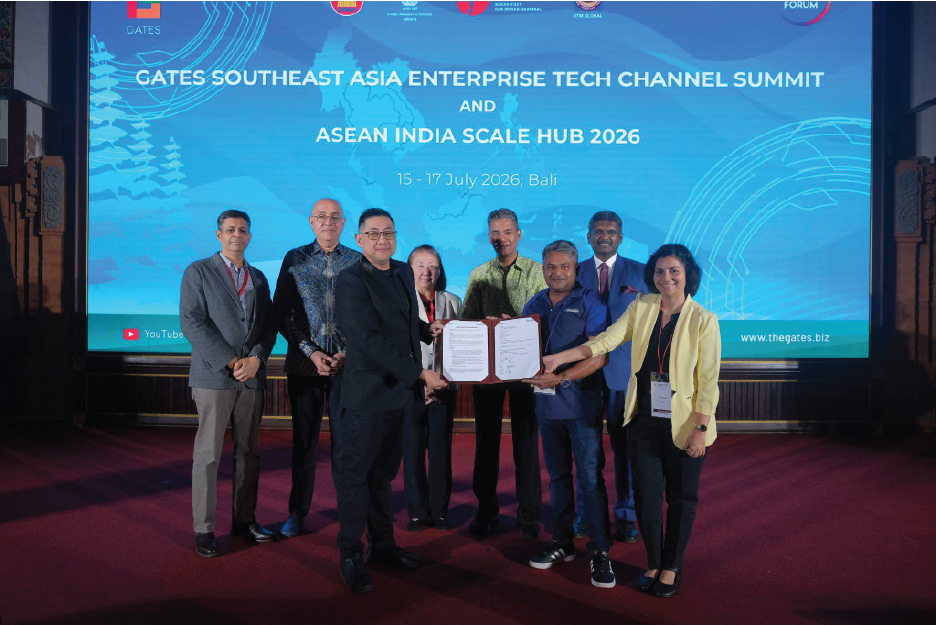
One of the summit's most tangible outcomes was the signing of a five-year Memorandum of Understanding between Nitrodynamics Aerospace and Defence Private Limited (NDAD) of India and PT BTI Indo Tekno (BTI-Defence) of Indonesia.
The agreement establishes a framework for cooperation in defence and aerospace technologies, including technology development, local manufacturing and assembly, systems integration, maintenance, research and development, training, and participation in procurement programmes.
Priority areas include electronic warfare, intelligence and surveillance systems, radar technologies, unmanned platforms, counter-drone systems, military artificial intelligence, command-and-control systems, and data fusion platforms. The agreement was witnessed by senior ASEAN, Indian, and Indonesian representatives, including Satvinder Singh, Evangeline T. Ong Jimenez-DuCrocq, Indonesia's Permanent Representative to ASEAN M.I. Derry Aman, Srinivas Gotru, and Ashish Kapahi.
The agreement represented one of the summit's first concrete commercial outcomes, connecting India's defence technology capabilities with Indonesia's industrial capabilities and market access. It also demonstrated how ASEAN-India ScaleHub's scope is expanding beyond the digital economy into advanced manufacturing and strategic technology cooperation.
Building Partnerships Beyond the Summit
The closing ceremony emphasized that the impact of ASEAN-India ScaleHub extends beyond the three-day gathering.
The platform's long-term objective is to create an ecosystem where startups, enterprises, governments, universities, investors, and technology partners can continue collaborating after the summit concludes. This was reflected in remarks by H.E. Sandeep Chakravorty, Ambassador of India to Indonesia, who highlighted the growing institutional links between India and Indonesia.
"One of the outcomes of Prime Minister Modi's visit is discussions already on for bringing IIT Madras to Indonesia. So I think ScaleHub can take credit for that," Chakravorty said during the closing ceremony.
The development points to a broader dimension of the ScaleHub platform, where business connections can lead to longer-term cooperation in higher education, research, technology development, and innovation between India and Indonesia.
The summit also recognized leading companies and emerging technology providers through its awards programme. IndieRise received the AI Vendor of the Year award for its work applying artificial intelligence to enterprise operations and practical business solutions. The Smarter Solution Edge was named Health Tech Vendor of the Year, while Accops received the Security Solutions Vendor of the Year award. AMX UAV was recognized as Emergent Vendor of the Year for its unmanned aerial vehicle technologies.
The awards reflected the diversity of technologies represented at the summit, ranging from AI and enterprise software to cybersecurity, healthcare, sustainability, cloud technologies, and advanced industrial solutions.
Shaping the Next Chapter of ASEAN-India Innovation
With more than 80 participating technology companies, over 1,200 curated business meetings, strategic discussions, workshops, Smart Pitch sessions, and emerging institutional partnerships, ASEAN-India ScaleHub 2026 demonstrated the growing maturity of India-Southeast Asia technology and business cooperation.
Over the three-day summit, policymakers outlined a shared vision for regional innovation, business leaders examined the impact of AI and digital transformation, researchers explored pathways to commercialization, and startups connected directly with potential customers, investors, and partners.
The outcome was not limited to discussions inside the conference venue. The business matchmaking sessions created direct commercial opportunities, while the NDAD and BTI-Defence agreement demonstrated how the platform can facilitate concrete cross-border partnerships. At the institutional level, discussions around IIT Madras further illustrated the potential for relationships established through ScaleHub to contribute to broader cooperation between India and Indonesia.
Rather than functioning solely as an annual conference, ASEAN-India ScaleHub is positioning itself as a regional ecosystem connecting research with industry, startups with customers, investors with entrepreneurs, and governments with the private sector.
As the 2026 edition concluded in Bali, the summit reinforced a central message: the future of ASEAN-India cooperation will depend not only on technological innovation, but also on the partnerships, trust, and shared commitment required to move ideas from laboratories to markets, from startups to enterprises, and from dialogue to long-term regional collaboration.